
+

Product
Solutions
Resources
Company
Partners
+

.svg)
Blog posts
This comprehensive video covers the critical aspects to properly evaluate windows, and determine their solar heat gain.
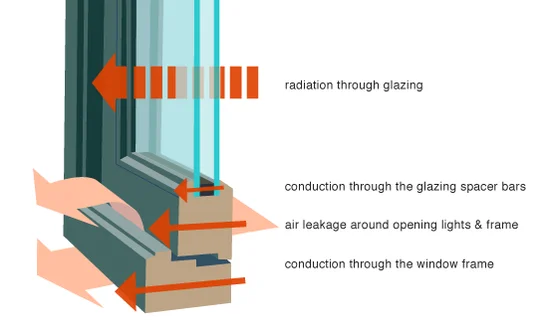
Windows are the single largest factor in cooling load calculations. Not walls. Not the roof. Windows.
That might seem counterintuitive. Walls have more surface area. Roofs take direct sun all day. But windows let solar radiation pass directly into the home, and they do it through surfaces with U-values ten to twenty times higher than insulated wall assemblies.
Get windows right, and your load calculation reflects reality. Get them wrong, and everything downstream—equipment selection, duct sizing, comfort expectations—starts from a flawed foundation.
When you're evaluating windows during a site visit, you're gathering several pieces of information:
Frame material. Metal, wood, vinyl, or insulated fiberglass. Each conducts heat differently. Metal frames without thermal breaks are the worst performers. Insulated fiberglass and vinyl are typically the best.
Glass type. This is where it gets trickier. You need to determine whether you're looking at clear glass, heat-absorbing tinted glass, low-E coated glass, or reflective glass. Each has dramatically different solar heat gain characteristics.
Number of panes. Single, double, or triple glazing. More panes mean more insulating air spaces and lower U-values.
U-value and solar heat gain coefficient. If you can get actual numbers, use them. Estimates work, but measured values are better.
Newer windows often have NFRC (National Fenestration Rating Council) stickers. Sometimes they're visible on the glass itself, but more often they're tucked inside the frame jamb where they won't be seen during normal use.
If you find an NFRC certification number, you can look up the exact U-value and solar heat gain coefficient at nfrc.org. That gives you manufacturer-tested data instead of estimates.
Another source: the homeowner. If someone recently replaced 57 windows—and paid the bill that comes with that—they probably remember exactly what they bought. Ask if they have documentation. The specs are likely sitting in a folder somewhere.
For older windows without documentation, Manual J includes tables that estimate U-values based on frame type, glazing configuration, and glass characteristics. BPI (Building Performance Institute) publishes similar reference charts. These aren't as precise as NFRC data, but they're based on real testing and get you in the right range.
How do you tell if a window is single, double, or triple pane without taking it apart?
Some people used to hold a lighter up to the glass and count reflections. Don't do that. On certain window types, the heat can actually damage the coating or seal. Not worth the risk.
Instead, use your finger like you would with a mirror. Touch the glass in a corner and look at the reflection. You'll see your fingertip, and you'll see reflections of it from each glass surface. Count the reflections to determine the number of panes.
Single pane: two reflections (front and back of one piece of glass)Double pane: four reflections (two pieces of glass, four surfaces)Triple pane: six reflections
Once you get past double pane, the reflections can be hard to distinguish. But triple-pane windows are noticeably deeper in the frame—if the window is operable, you'll feel the difference when you open it.
Also look for the faint tint that indicates low-E coating. It's subtle, but low-E glass has a slight color cast compared to clear glass when you look at it from an angle.
Bug screens seem like a minor detail. They're not.
A screen deflects a portion of solar radiation before it reaches the glass. The reduction isn't huge on any single window, but multiply it across every window in the house and it adds up.
Manual J accounts for this, but you have to note whether screens are present and whether they cover the full window or just half. A home with full screens on every window has a meaningfully different cooling load than the same home with no screens.
What's covering the windows on the inside affects how much heat actually enters the living space.
Drapes, blinds, shades, and curtains all reduce solar heat gain to varying degrees. If you're walking through an occupied home and see window treatments, note what's there and whether they're typically drawn during afternoon hours.
For new construction or vacant homes where you don't know what window treatments will be installed, Manual J specifies a default assumption: medium blinds at 45 degrees, half dropped. Use that unless the plans specify something different.
The key is consistency. Don't assume heavy drapes on every window to make the cooling load come out smaller. Use what's actually there, or use the standard default.
Shading from outside the window is even more effective than interior treatments because it blocks solar radiation before it passes through the glass.
Overhangs, porches, and deep soffits can dramatically reduce cooling load on windows they shade. But the shading effect depends on geometry—specifically, the relationship between how far the overhang extends and how far above the window it sits.
To qualify as effective shading in Manual J calculations, the overhang needs roughly a 2:1 ratio of extension to height above the window. An eight-foot porch roof that starts just above a picture window provides significant shading. A standard soffit two feet above a bedroom window probably doesn't shade the glass at all during peak sun angles.
Measure both dimensions: distance from the top of the window to the bottom of the overhang, and how far the overhang projects outward. The calculation determines whether the shading line actually crosses the window during peak cooling hours.
What's on the ground outside the window affects heat gain too.
Sunlight hitting surfaces outside reflects back toward the house. Concrete, asphalt, and water are highly reflective—they bounce significant solar radiation back at windows. Grass, landscaping, and dark surfaces absorb more and reflect less.
Manual J defaults to a combination of grass and crushed rock, which represents typical residential surroundings. But if a home has a concrete patio outside large south-facing windows, or sits on a lot that's mostly hardscape, the actual reflectance is higher than default.
This isn't usually a huge factor, but it's one more input that affects accuracy.
The same window behaves completely differently depending on which direction it faces.
A north-facing window gets minimal direct sun. Its cooling impact comes primarily from conductive heat transfer based on the temperature difference between inside and outside.
A south-facing window gets direct sun for much of the day, but the high sun angle in summer means overhangs can effectively shade it.
West-facing windows are the worst case for cooling load. They take direct sun during late afternoon—exactly when outdoor temperatures peak and when you're calculating maximum cooling demand. A large west-facing window with no shading can dominate the cooling load for an entire room.
This is why window details matter more for some orientations than others. Getting the U-value slightly wrong on a north window barely moves the needle. Getting it wrong on a west window throws off your whole calculation.
When you're short on time, prioritize accuracy on south and west exposures. Those are the windows driving your peak cooling load at 4-5 PM on the hottest design day.
Window evaluation isn't complicated, but it requires attention to detail:
Windows represent the largest piece of the cooling load pie. The time you spend getting them right pays off in load calculations that actually match what the home needs.
Conduit Tech captures window characteristics during the scanning process and applies appropriate values automatically. Book a demo to see how the platform handles fenestration and other load calculation inputs.
.svg)


Copyright 2025 Conduit Tech, LLC. All rights reserved. Terms and Conditions Privacy Policy
Your Privacy Choices Do Not Sell or Share My Personal Information